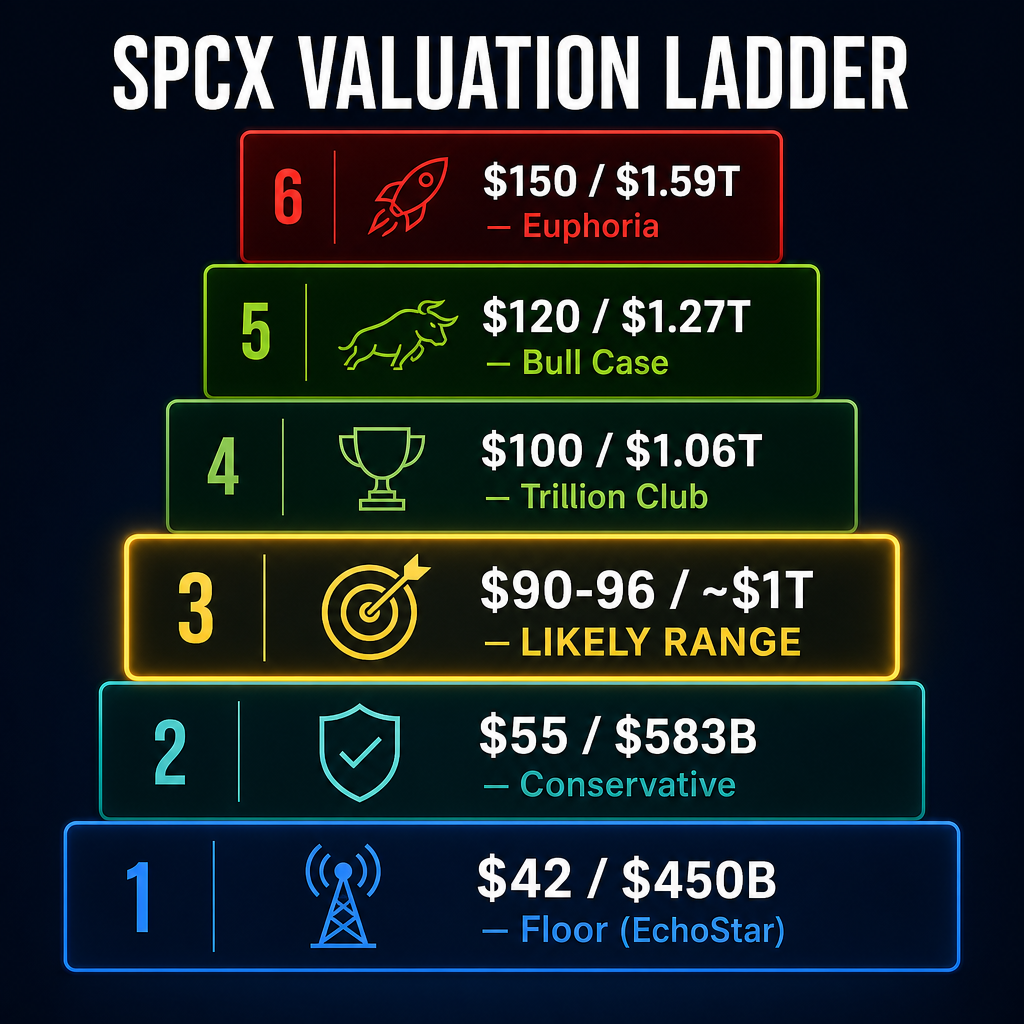
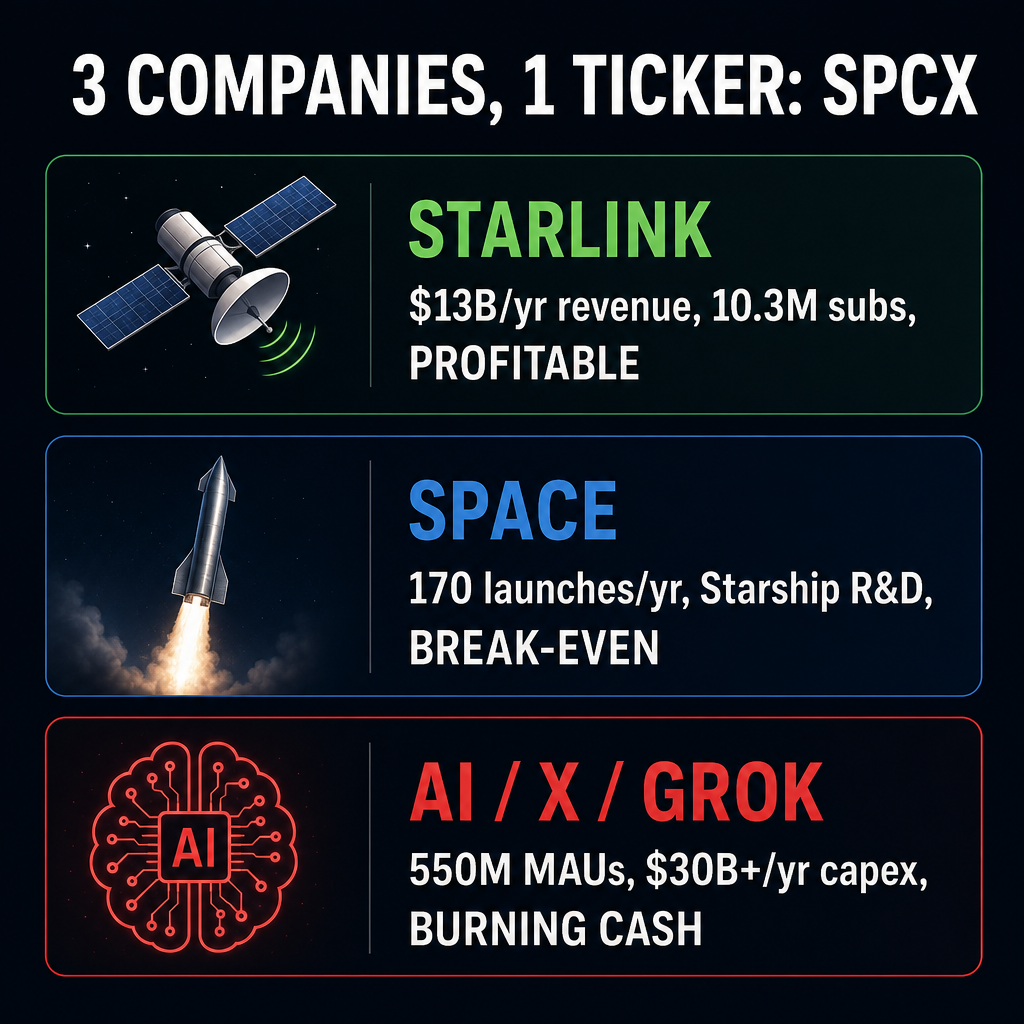
Platform-optimized posts. Copy, download, and post across channels.
𝕏 Algorithm Tips (May 2026)
Replies are the #1 signal — posts that provoke replies get massive distribution
No links until the final post — links cut reach by ~40%
Whitespace and short lines = higher dwell time = more reach
Contrarian takes drive quote tweets — X weights QTs as a separate high signal
No hashtags — the algo doesn't weight them and they read as spam
𝕏
6-Post Thread
Post sequentially, ~30 min apart for max reach. Post 6 gets the link.
🧵 Thread — Post 1 of 6 first, add link only to Post 6
POST 1 / 7Thread opener · Hook
𝕏
SpaceX has filed for an IPO.
The S-1 reveals a company Wall Street doesn't know how to price.
$11.8B in revenue. Three completely different businesses under one roof.
Here's what the filing actually says vs. what the headlines missed:
Starlink generated $8.4B in 2024.
That's 71% of all SpaceX revenue from a product that didn't exist 5 years ago.
18,000 satellites in orbit.
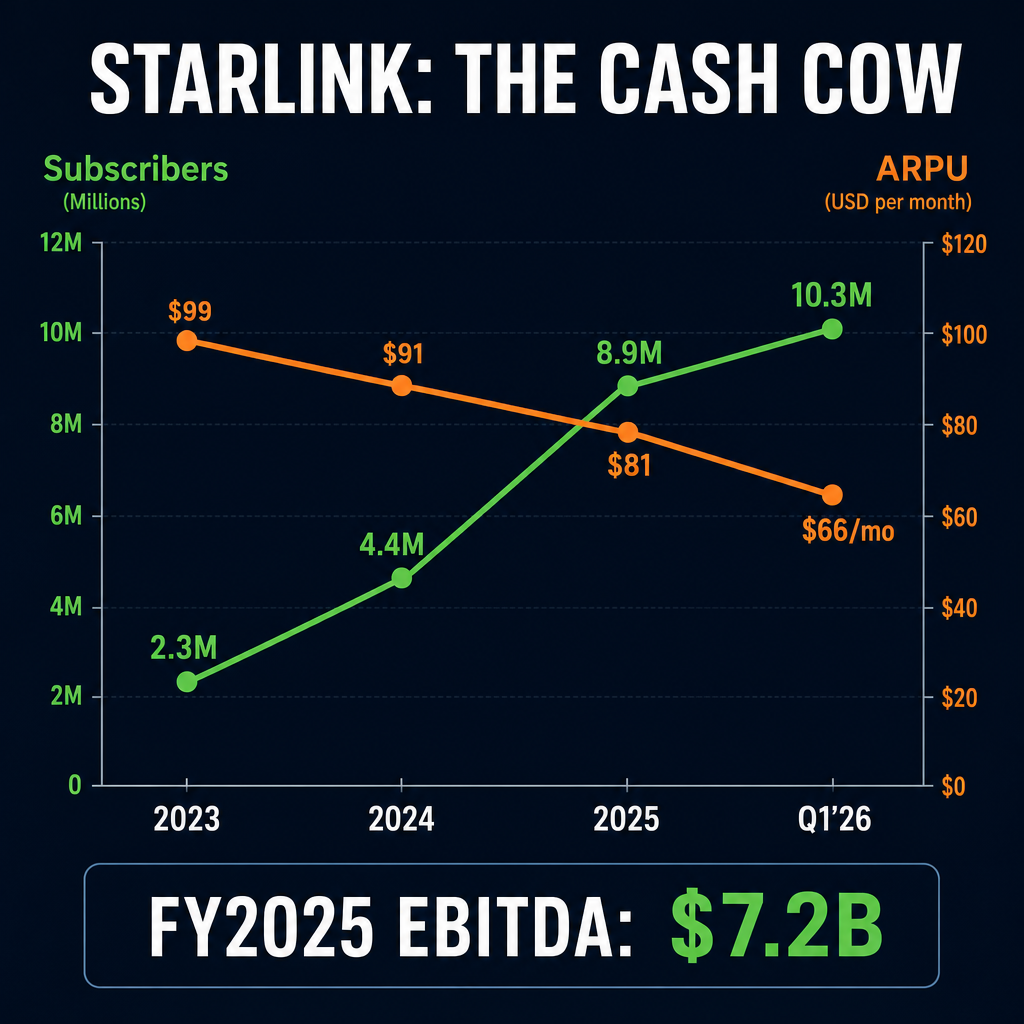
4.6M active subscribers.
$140/month average revenue per user.
The scary part: 1 billion addressable customers.
They've reached maybe 0.46% of them.
Hot take: SpaceX isn't a space company.
It's the only entity that can solve AI's hardest infrastructure problem.
Every hyperscaler needs more compute.
Compute needs power.
Power needs land.
Land near fiber is gone.
Starlink doesn't need any of that.
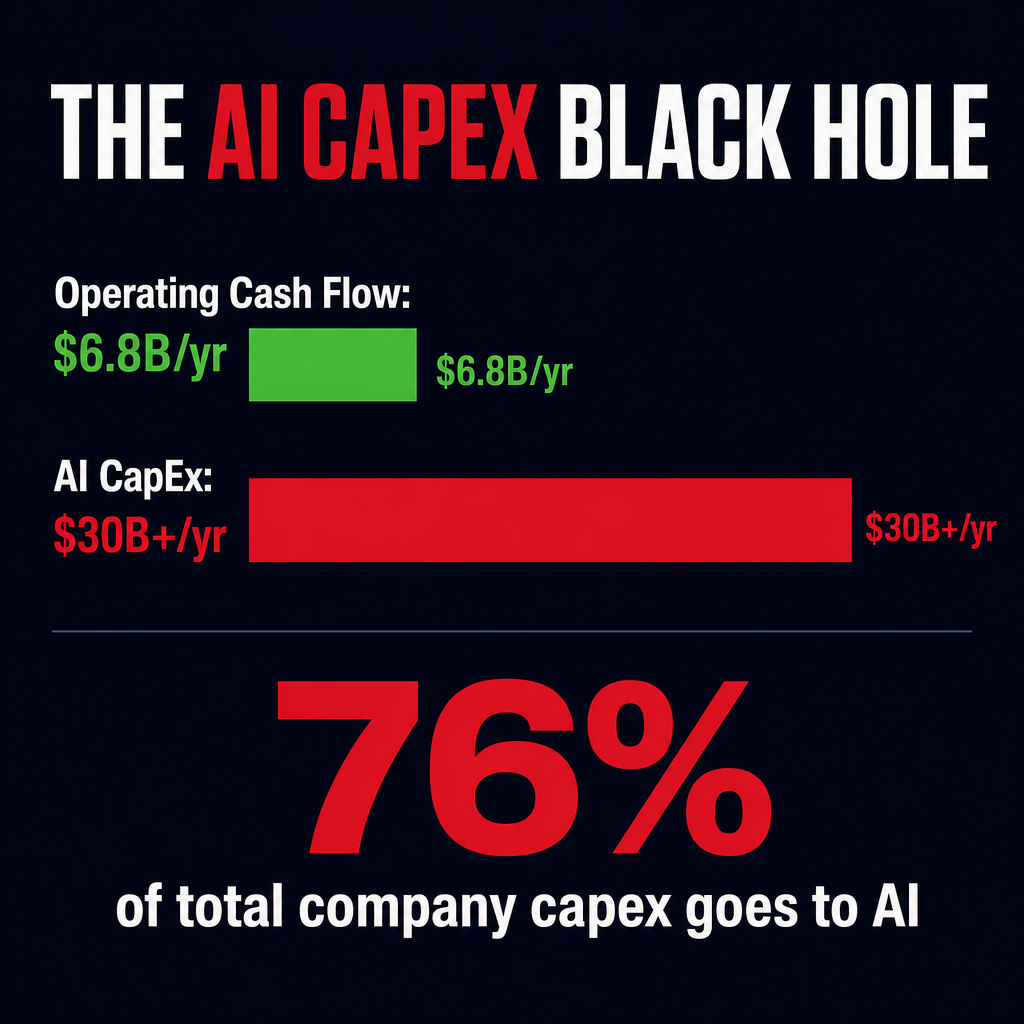
$30B in data center CAPEX is pointed at the same bottleneck SpaceX quietly removed.
Reply if you disagree. Genuinely curious what I'm missing.
The moat most analysts miss:
SpaceX builds the rocket → launches the satellite → owns the spectrum → sells the internet.
Every step is vertical.
Amazon spent 12 years and $400B building a supply chain this integrated on the ground.
SpaceX did it in orbit.
Competitors need ~$10B and 8+ years just to reach parity on launch costs.
That's not a moat. That's a gravity well.
The $350B valuation debate misses the point.
Bears say: It's priced at 30× revenue. Insane.
Bulls say: Starlink alone could be worth $400B+ at scale.
Here's what both miss:
Starlink at 5% global penetration → $70B annual revenue
→ At a 15× multiple → $1T market cap from one segment alone
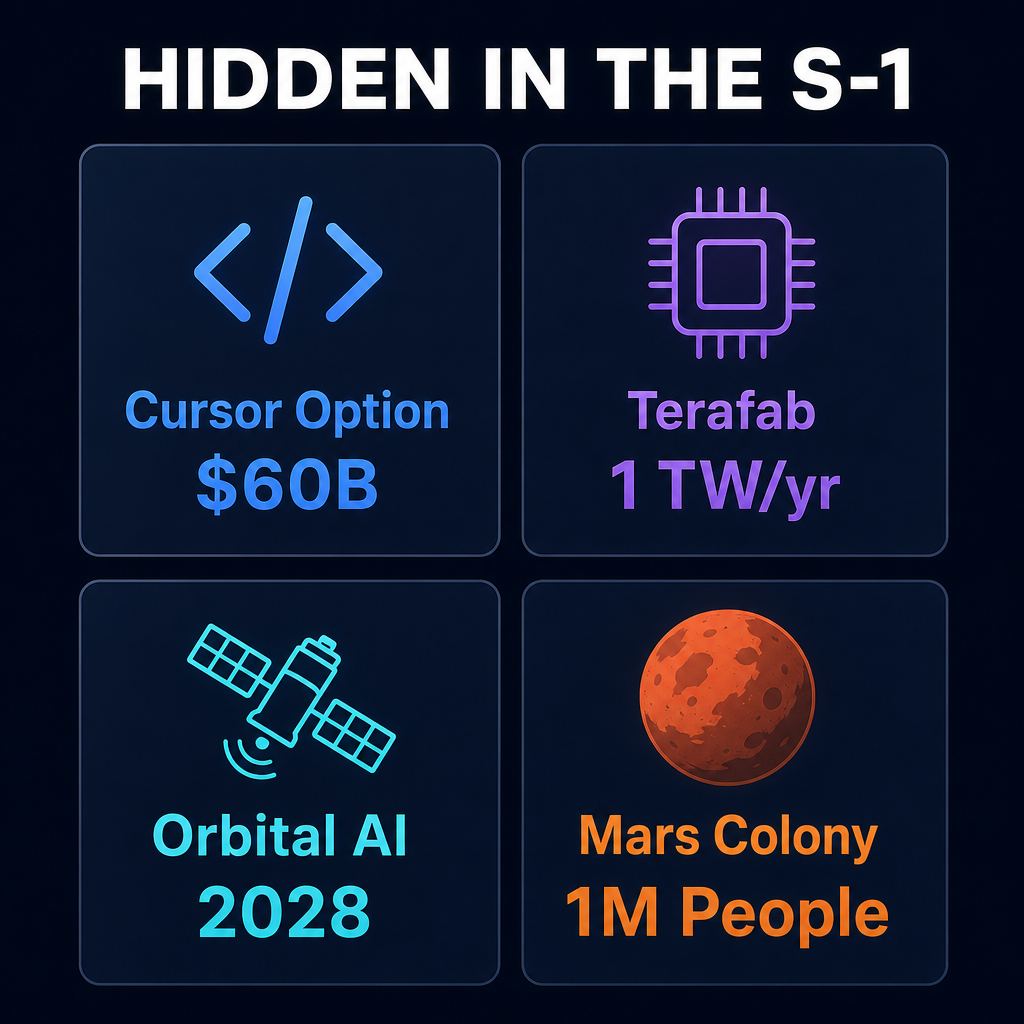
Mars colonization isn't in the model.
Starlink-for-ships isn't in the model.
Starlink-for-aircraft isn't in the model.
Is $350B expensive? Depends which company you think you're buying.
Three things that should concern every investor:
→ Dual-class shares. Musk controls the vote. Forever.
→ Starlink is 71% of revenue. If Bezos' Kuiper hits 800+ satellites, pricing pressure is real.
→ Regulatory: orbital spectrum and FCC slots are geopolitical assets now. Not just business ones.
SpaceX is generational. But cheap it is not.
Full deep-dive with charts and segment breakdown:
https://spacex.clawz.org
SpaceX S-1 in one slide:
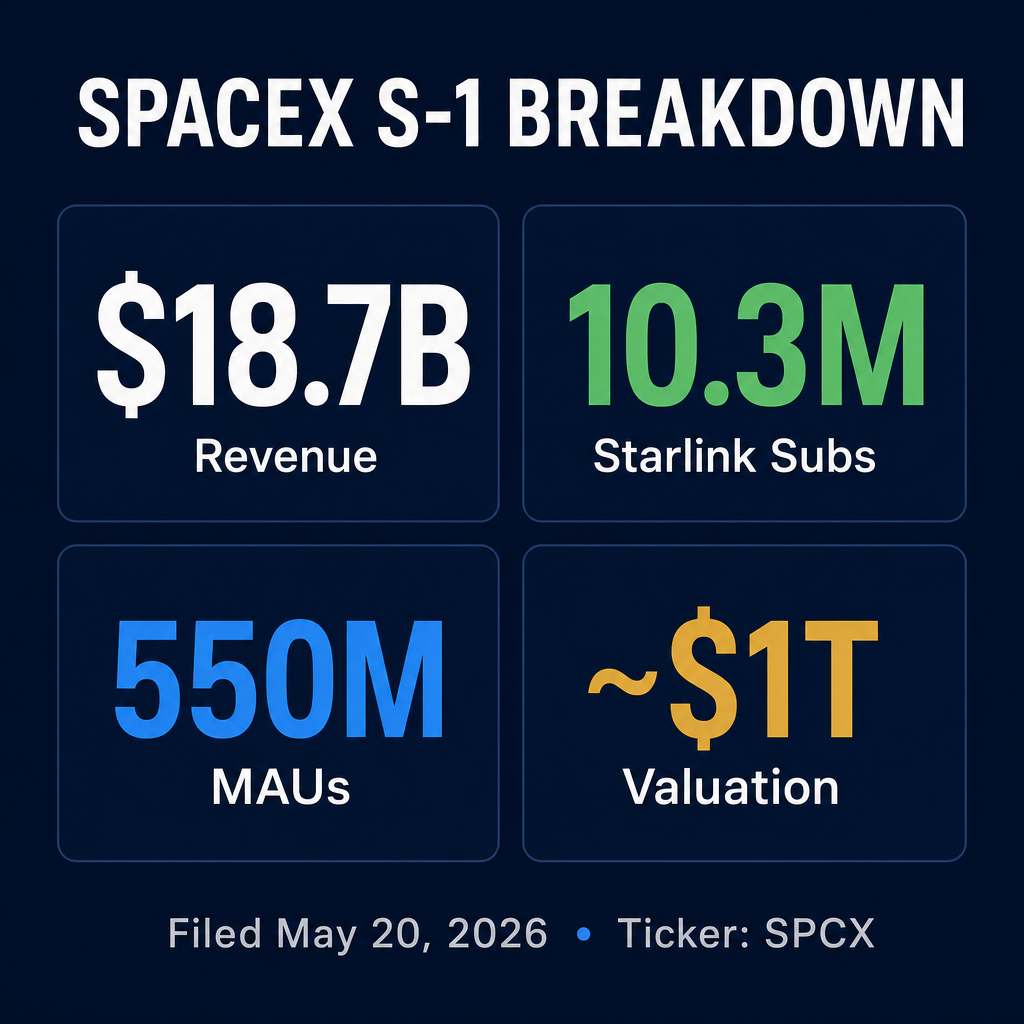
Revenue: $11.8B
• Starlink: $8.4B (71%)
• Launch services: $2.9B
• Other: $0.5B
Valuation: $350B
Growth rate: 33% YoY
Subscribers: 4.6M → target 1B
The question isn't whether this company is good.
It's whether any of us know how to price something this new.
Full breakdown → https://spacex.clawz.org
Hook line must stand alone — LinkedIn shows only first 2 lines before "...see more"
Personal angle outperforms analysis — "As someone who…" gets 2× the reach
1,200–1,500 characters is the sweet spot for dwell time signals
One image per post. End with a direct question to drive comments.
3–5 hashtags at the very end only — never in the body
in
3 LinkedIn Posts
Standalone posts — not a thread. Space them 24–48h apart for organic reach.
POST 1The S-1 Read — Key numbers
LinkedIn
I spent the weekend reading the SpaceX S-1. Here's what stood out.
Most coverage focused on the $350B headline valuation. I was more interested in the unit economics underneath.
SpaceX reported $11.8B in revenue for 2024 — up 33% year-over-year. But the real story is the composition:
Starlink, the satellite internet service, contributed $8.4B — 71% of total revenue. A business that literally did not exist in 2019 now represents nearly three-quarters of the company's top line.
Starlink has 4.6 million active subscribers paying an average of roughly $140/month. The total addressable market is estimated at over 1 billion households and businesses. Current penetration: less than 0.5%.
For context: Amazon took 15 years and spent hundreds of billions to build its logistics infrastructure. SpaceX built an infrastructure business in orbit — vertically integrated from rocket to spectrum to consumer — in roughly the same time frame at a fraction of the capital.
The launch services business ($2.9B) is itself the world's most advanced, but it increasingly looks like a captive supply chain for Starlink rather than a standalone revenue driver.
What I keep coming back to: the market is trying to price a satellite internet company using telecom multiples, a launch company using aerospace multiples, and a Mars mission using… nothing comparable. All three are the same entity.
Is $350B expensive? By traditional metrics, absolutely. By optionality metrics, it might be a bargain.
What do you think — does traditional valuation even apply here?
#SpaceX #IPO #Investing #TechFinance #SpaceIndustry
The AI industry has a problem it isn't talking about openly. SpaceX might be the only one who solved it.
Every major hyperscaler — Microsoft, Google, Amazon, Meta — is racing to build more AI compute. They've collectively committed over $300 billion in data center capex for 2025–2026.
But compute needs power. Power needs infrastructure. Infrastructure needs land. Land near fiber and water for cooling is becoming genuinely scarce.
Starlink removes all of those constraints simultaneously.
A Starlink-connected data center can be located anywhere on earth — remote deserts with cheap solar, Arctic tundra with natural cooling, offshore platforms. The constraint that's been invisible (physical location of high-bandwidth connectivity) disappears.
This is why the framing of "SpaceX vs. traditional telecoms" misses the point entirely. The real competition is "Starlink as the backbone for the next generation of AI infrastructure."
Microsoft and OpenAI have already inked Starlink deals. Amazon uses SpaceX for satellite positioning data. The B2B relationship between SpaceX and the AI industry is nascent but structurally inevitable.
The $30B question: as AI infrastructure demand compounds at 40%+ annually, does Starlink become the most critical infrastructure company on earth?
The S-1 doesn't answer this — but the numbers point toward it.
What's your read on the Starlink-AI intersection?
#AI #Starlink #SpaceX #Infrastructure #FutureOfTech
The most important sentence in the SpaceX S-1 isn't about revenue. It's about control.
SpaceX is filing with a dual-class share structure. Elon Musk retains supervoting shares. Public investors get economic exposure but essentially no governance rights.
This is becoming the default for transformational technology companies — and it's worth debating openly.
The argument for: companies pursuing 20-30 year missions can't be subject to quarterly earnings pressure. Amazon's AWS, which now generates the majority of its profits, was protected by Jeff Bezos' controlling stake through years when Wall Street wanted the capex cut. Alphabet's moonshots — Waymo, DeepMind — required insulation from short-term shareholders.
SpaceX is building Starship, a fully reusable Mars transport system. The ROI horizon on that investment makes AWS look like a quick flip. If you believe in the mission, you arguably want the founder insulated.
The argument against: we've seen how founder control without accountability ends. Single points of failure in governance are a known risk. SpaceX's regulatory exposure is growing — FCC spectrum, Pentagon contracts, international satellite rights. Decisions that affect tens of millions of people will be made by a board with limited ability to check the CEO.
Neither argument is wrong. But the question of whether founder control is appropriate for infrastructure at planetary scale is one the IPO market hasn't fully reckoned with.
Worth thinking about before the allocation opens.
What's your view on dual-class structures at this scale?
#CorporateGovernance #SpaceX #IPO #Leadership #TechPolicy
5Opportunity: "0.46% of 1 billion potential customers" — massive white space visual showing how small the current base is
6CTA: "Full analysis at spacex.clawz.org" + follow prompt
SpaceX is going public — and the numbers are unlike anything we've seen 🚀
$11.8B revenue. 33% growth. 18,000 satellites.
Swipe for the full breakdown →
Full analysis (link in bio): spacex.clawz.org
#SpaceX #IPO #Investing #Starlink #TechIPO #SpaceInvesting
1Cover: "SpaceX IPO: Bull 🐂 or Bear 🐻? Swipe to decide." — split-color background, green/red
2Bull Case: Green slide. "Starlink at 5% penetration = $70B annual revenue. Vertical integration = unbreakable moat. First-mover in orbital internet." Use post5-valuation.png
3Bear Case: Red slide. "30× revenue multiple. Dual-class = Musk controls everything. Amazon Kuiper is coming with $10B+ in backing." Use post4-strategic.png
4Bottom Line: White/neutral slide. "The real question isn't bull or bear. It's whether any existing valuation framework applies to a company that's building civilization infrastructure. Comment 🐂 or 🐻"
$350 billion. Worth it? 🐂🐻
SpaceX just filed its S-1. I broke down the bull case vs. the bear case.
Swipe — then drop your verdict in the comments 👇
Full deep-dive at spacex.clawz.org (link in bio)
#SpaceX #IPO #StockMarket #Investing #Starlink #ElonMusk #SpaceInvesting #TechStocks
The most important IPO of the decade just filed.
SpaceX: $11.8B revenue · 18,000 satellites · 4.6M subscribers
And they've reached 0.46% of their potential market.
Full breakdown at spacex.clawz.org (link in bio) 🚀
#SpaceX #IPO #Starlink #Investing #Space #ElonMusk